This project re-imagines what social care could look like by 2040, questioning how we can design more equitable, dignifying and personalised care systems rather than brace for the devastating future of care we are heading towards today in the United Kingdom. It focuses specifically on the needs of those with Neurodegenerative diseases in the future and how they can be better supported.
With the growing ageing population, the number of people above the age of 65 is likely to increase rapidly along with numbers of older adults living alone.
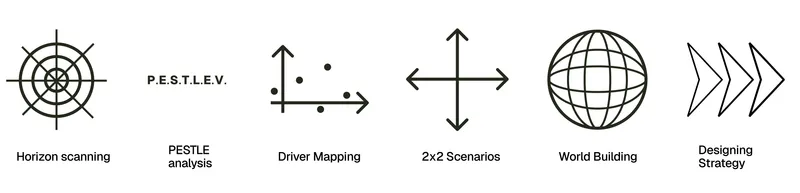
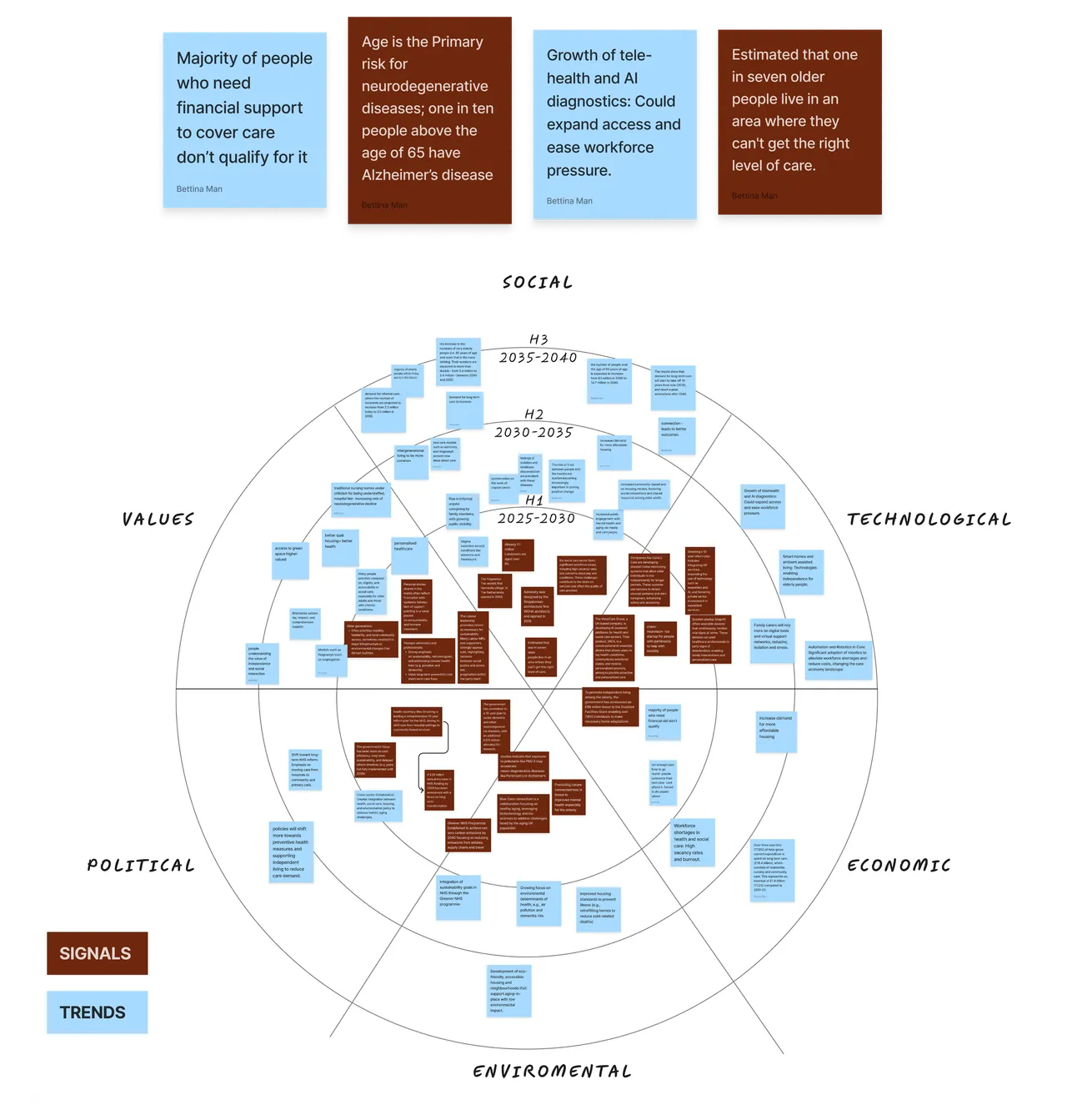
The Problem / Horizon Scanning
The demand for long-term care is expected to hit a peak around 2040.
Unpaid carers are already forced to prop up the care system today. If this continues, people living with neurodegenerative diseases will be extremely under supported in the future.
There is no one size fits all care solution for those suffering with neurodegenerative diseases. People’s care needs change over time and everyone has different preferences.
What if care for people with neurodegenerative diseases was personalised, co-ordinated and planned in advance? How can we maximise autonomy, social life, independence through care and we give people the agency to chose a future that best suits them and support them through it?
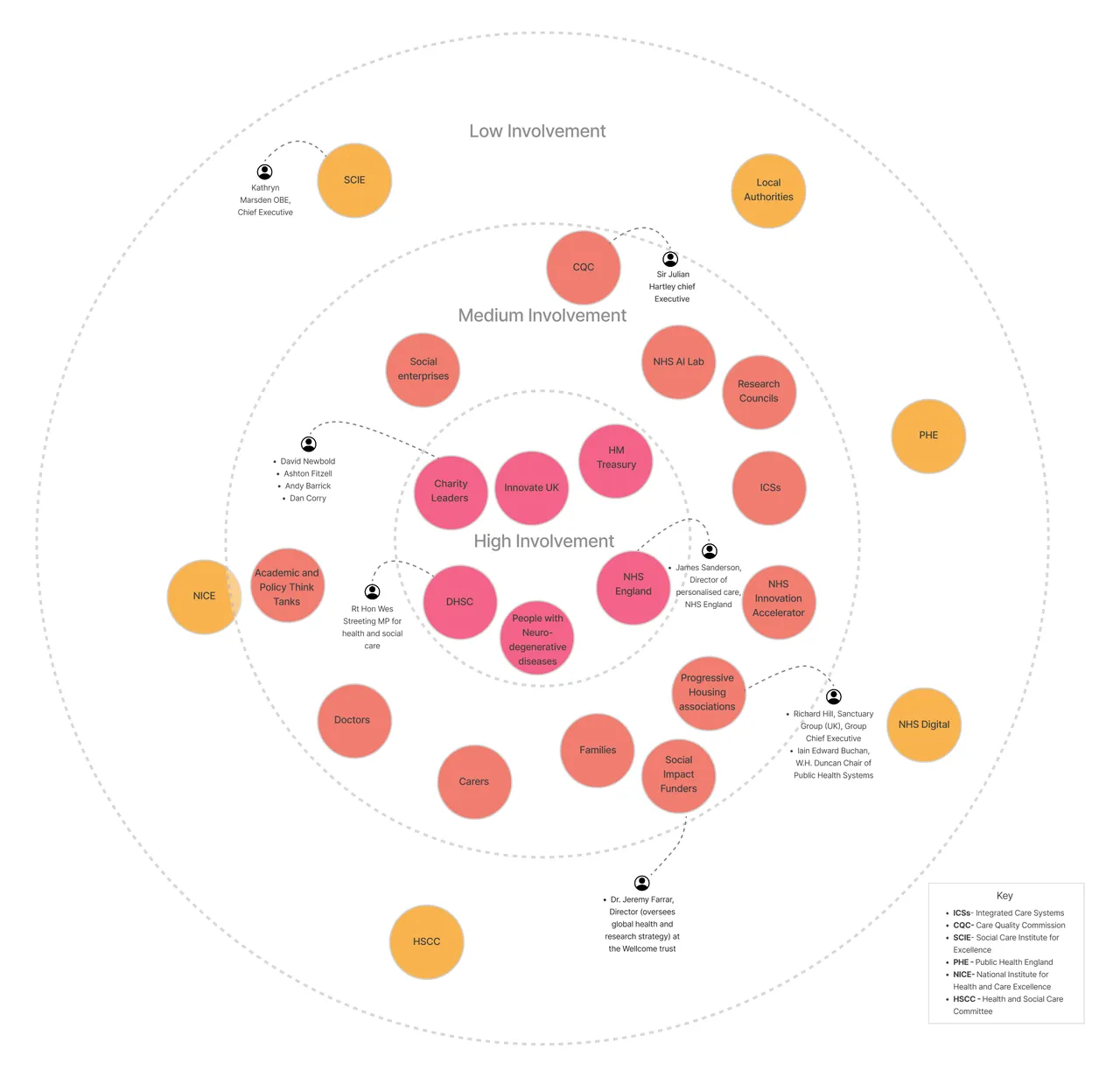
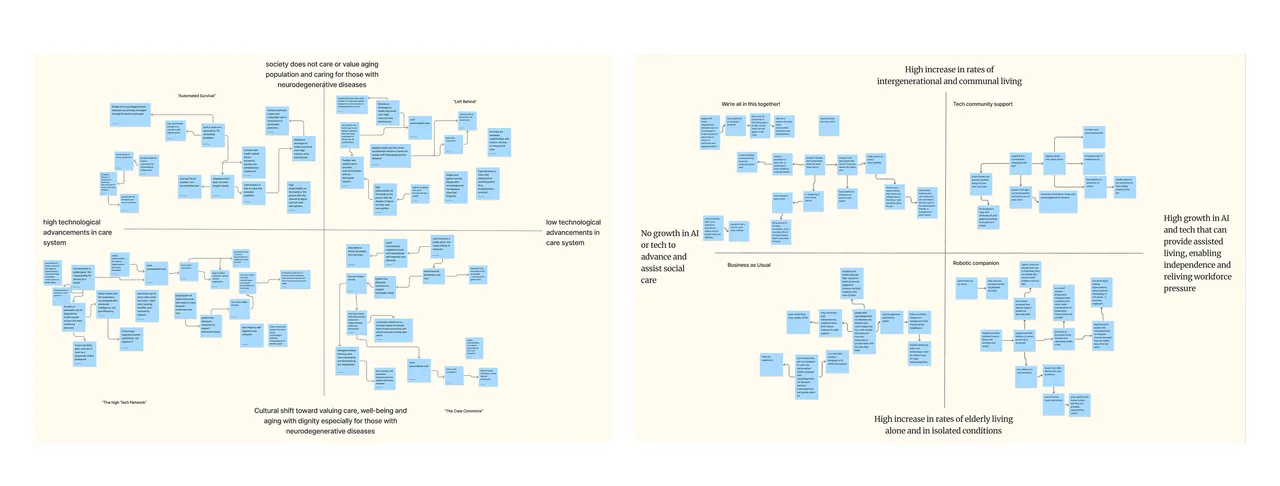
Stakeholder Mapping
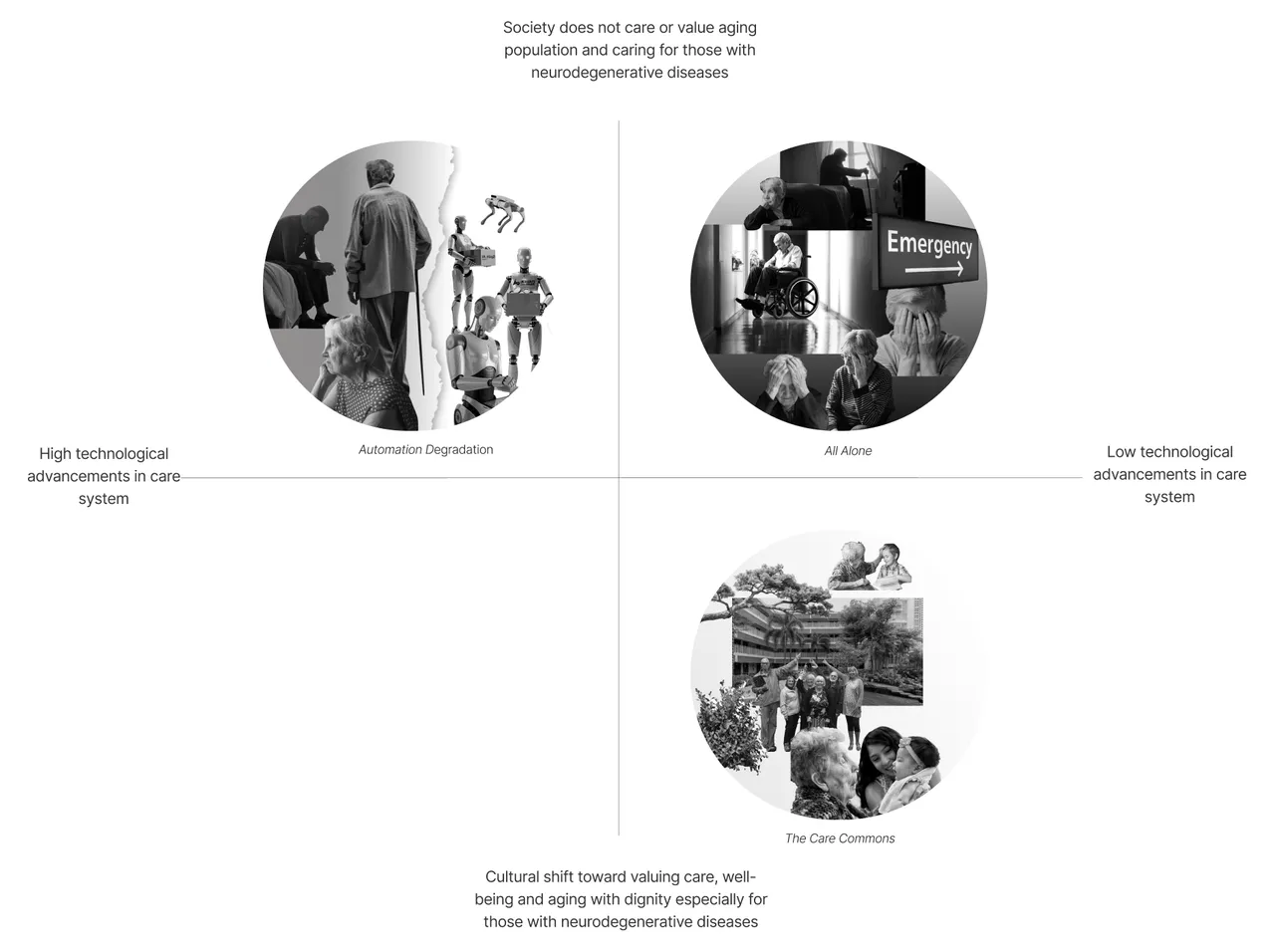
2x2 Scenarios
The specific axes after various iterations: ‘High/Low technological advancements in care system’ x ‘Valuing/ not valuing care and ageing with personalised support and dignity.’
Can you imagine a future where technology is so advanced that AI and robotics can take care of humans? How could this potentially alleviate pressure from an over strained care work-force?
A Preferable Future
The fourth scenario is the preferable future where high technology meets a high value for Neurodegenerative care. This scenario was developed through iterative feedback from expert interviews as well as the Three Future Frames process. It is designed in the context of what a preferable future could be for those living with neurodegenerative diseases using feedback in the form of activity packs completed by carers.
In this future, care is treated as a public good and a shared societal responsibility. Robotics, smart homes, and AI companions are designed specifically to support care, easing pressure on the workforce while making care more accessible, affordable, and personalised. Care assessments no longer focus on eligibility, but instead ask what an individual’s needs are and how they can best be met through flexible, customisable systems.
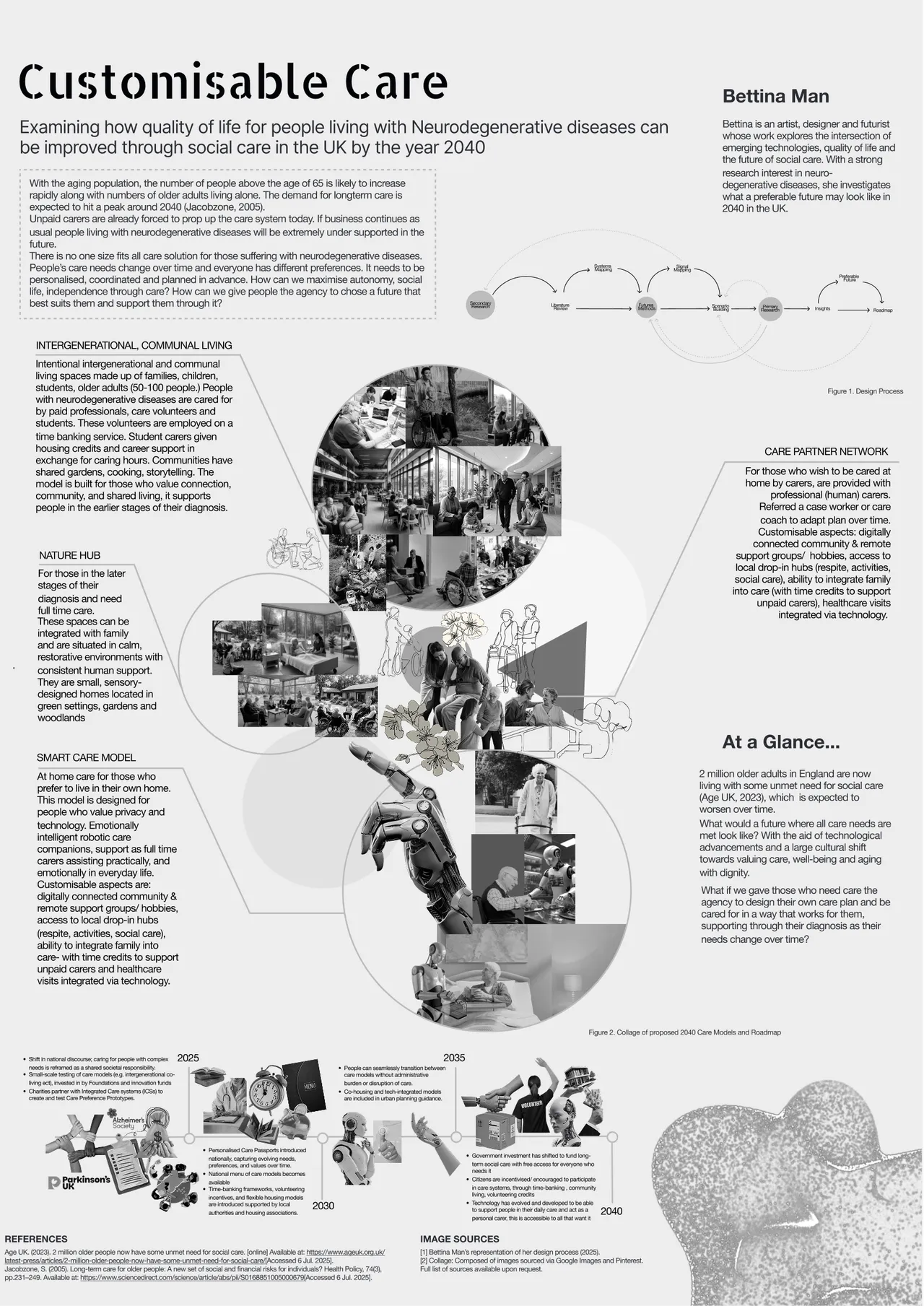
Based on personal needs and preferences, individuals are guided toward one of four care models: intergenerational communal living, smart homes, nature hubs, or the partner network, each offering further options for personalisation. Unpaid carers are formally recognised and compensated through a time-banking system, and social connection, personalised care, and independence are understood as essential components of care.
How can we bring this world to life? What kind of tangible objects or artefacts might be found in this preferable future?
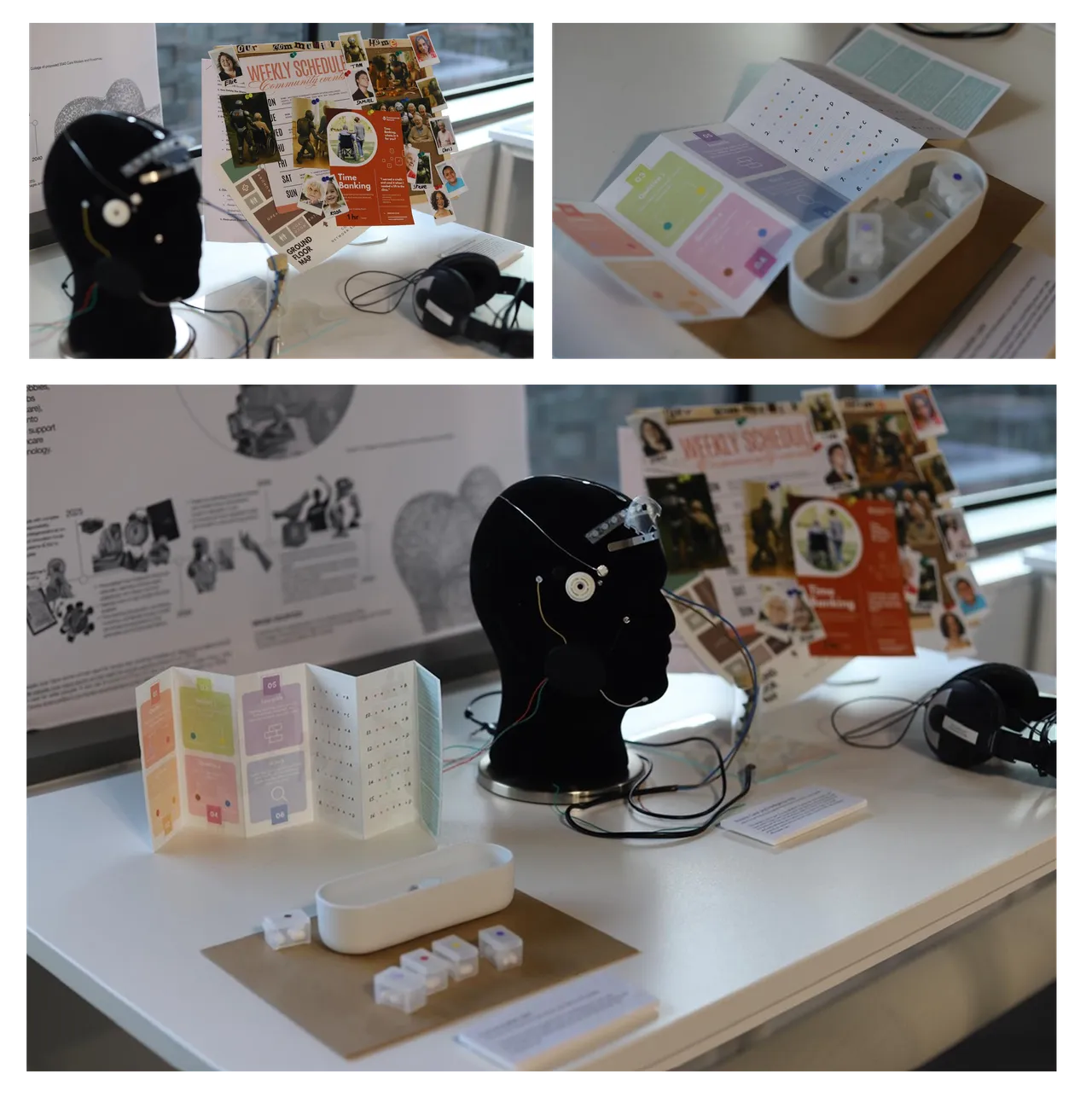
World-Building and Artefacts
The aim of this exhibition was to inspire, provoke and present ideas and opportunities to allow people to engage with and reconsider the pressing problems of today’s care system and to imagine an alterative future.
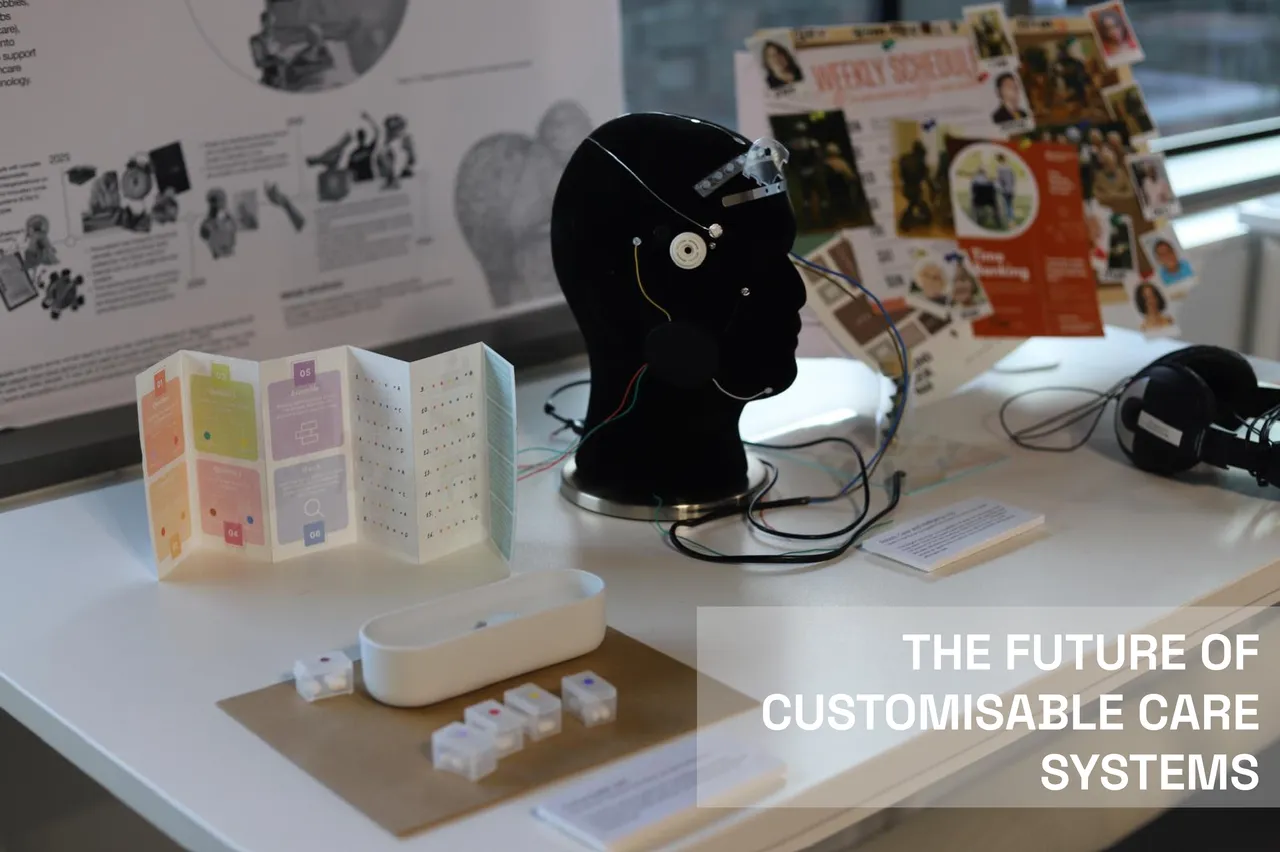
Robotic Head and Intelligence Chip
This prototype is a visualisation of what role technology could have within future care systems and how robotics can potentially ease the pressure off human carers. With the trend of AI companions and signals of early developments in the care robotics space, it could provide and opportunity to deliver more customisable, personalised and affordable care.
Customisable Care Activity
This activity was about engaging people with customising their own care, proposing how that system could work in the future and allowing them to put themselves in a situation where they can think about what their care preferences would be.
Intergenerational Living Care Model
This is from one of the proposed future care models centring around intergenerational and communal living. It would involve care robotics as well as human care volunteers who would receive compensation on a time banking service. This leaves room for people with neurodegenerative diseases to foster social connection and independence- vital for slowing the progression of their condition, mainly targetted at those in the early stages of diagnosis.
Exhibition Poster
How can we make turn this preferable future of 2040 into actionable steps towards building a better, more personalised, care future specifically for those living with Neurodegenerative Diseases?
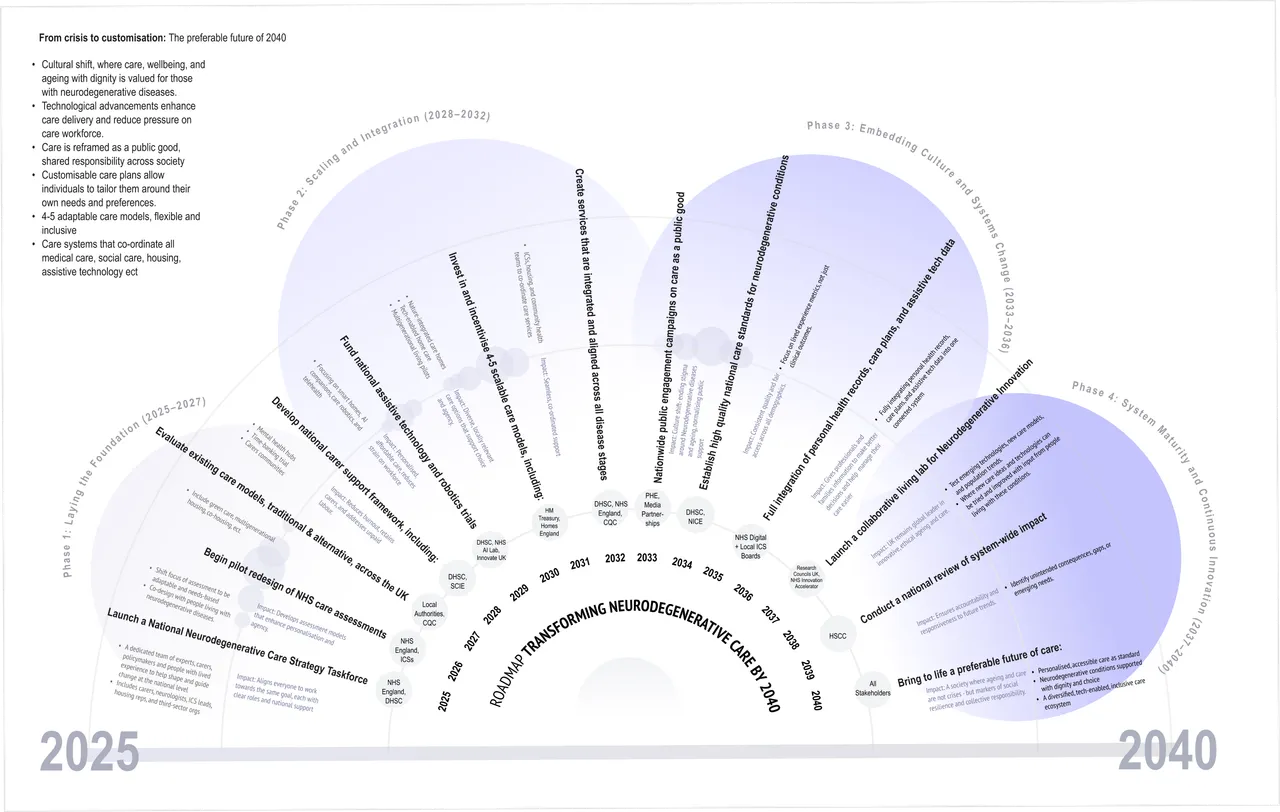
Roadmap to 2040
Actionable steps towards a future where care is abundant for those who need it, where it is dignifying, personalised and suits each individuals needs.
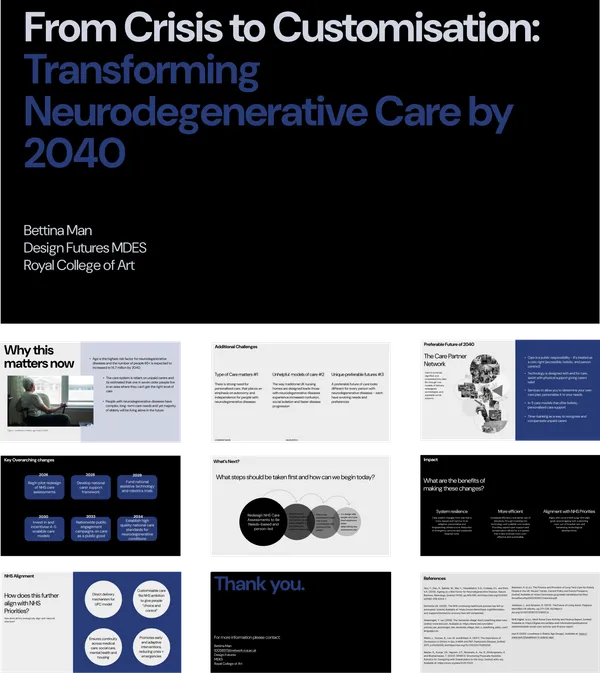
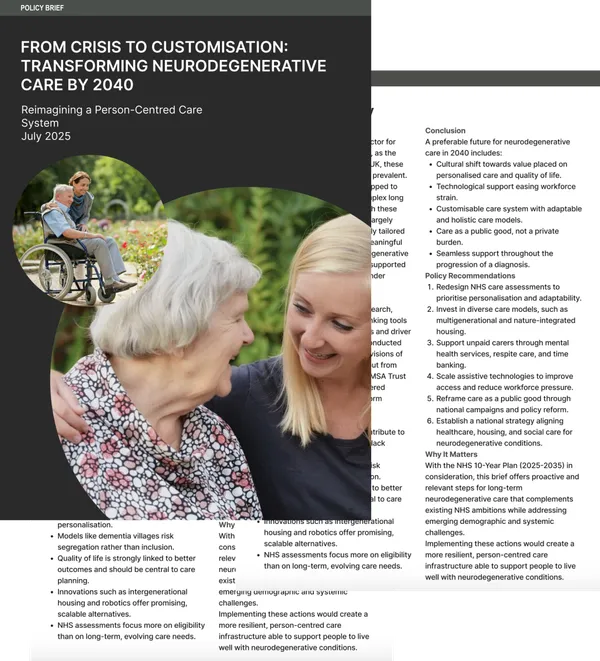
The policy Brief and Pitch Deck were created with an understanding that the first step would be to present the overarching problem to the Director of Personalised Care at NHS England. This would demonstrate the preferable future, outline key points of the roadmap as well as show how it aligns with their broader aims.
The pitch deck supports the depth of the project as well as research evidence and is a formal overview that covers all key areas, drawing out the urgency of the issue, stating why it needs to be addressed now and with clarity. The aim is to spark interest backed by credibility.