This project re-imagines what life in a post-capitalist world of 2040 could look like. Focused around a small community in the Netherlands, it questions the roles within it and how trade might work, specifically considering the way goods may be valued, shared and exchanged using a labour-time system.
The task was to design a short, experiential interaction that would allow participants to experiment with alternative ways of valuing and trading goods, not based on price or accumulation, but on labour, expertise, and collective governance and that:
Places participants inside a speculative, money-less system of exchange
Makes visible the labour, time, and expertise behind everyday goods
Challenges dominant assumptions about value, scarcity, and fairness
Enables negotiation and trade between interconnected communities
“How can we accept a system where the poorest people in many countries pay much higher tax rates than the super-rich? A flour seller Oxfam works with in Uganda pays 40 per cent tax each month, while some billionaires’ true tax rates have been as low as three per cent.” - Danny Sriskandarajah, Oxfam GB chief executive.
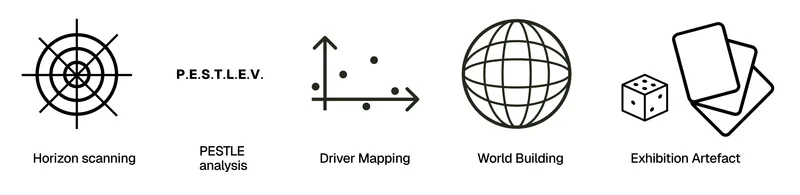
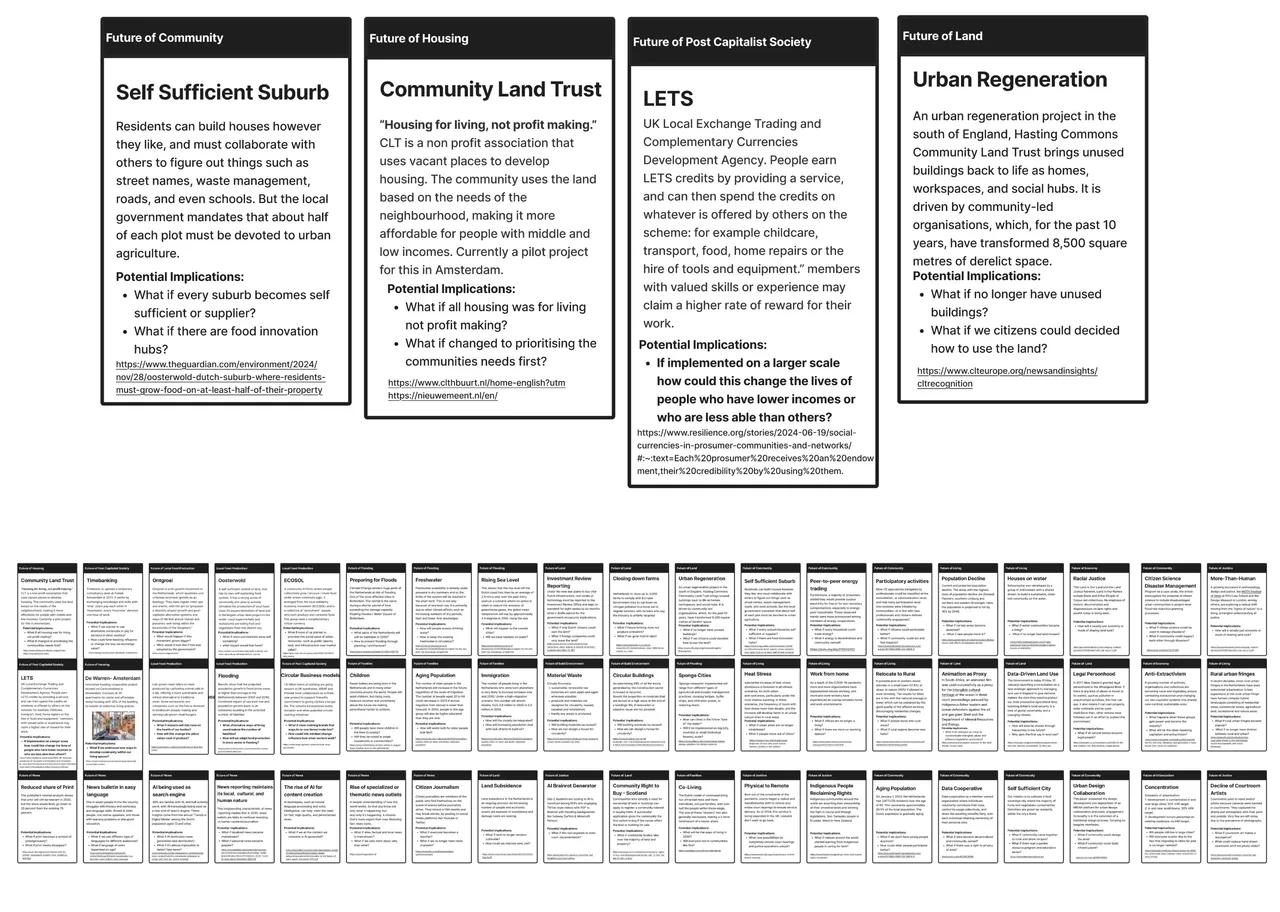
The Problem and Horizon Scanning
Our current economic system prioritises profit and endless growth over people and the planet, leading to extreme inequality, environmental destruction, and social injustice. Wealth and power are increasingly concentrated in the hands of a few, while many people face low wages, insecure work, and lack access to basic services. The New Economy calls for a shift towards an economic system that is designed to meet human needs, value care and well-being, reduce inequality, and operate within planetary limits. Rather than measuring success through GDP alone, it focuses on fairness, sustainability, and shared prosperity, ensuring the economy works for everyone, not just the wealthy.
Key Signals
What would a world where daily life that is organised around sufficiency, care, and collective well-being look like? Where value is defined by labour, expertise, and social contribution rather than profit. How can we imagine the changes this may have on different aspects of our everyday lives?
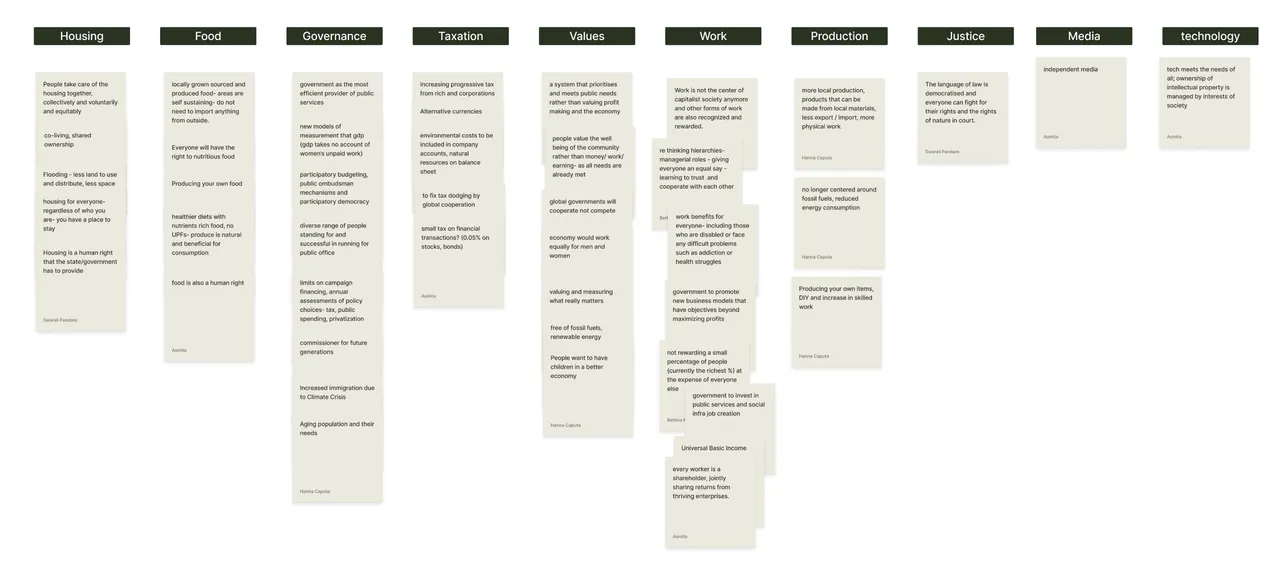
Defining the Key Aspects of the World / World-building
Basic needs such as housing, food, and energy are treated as rights rather than commodities. Housing is collectively cared for, food is locally produced and nutritious, and communities prioritise sufficiency over accumulation. Money and profit no longer sit at the centre of economic life; instead, value is understood through labour, care, expertise, and collective wellbeing. Work is distributed more evenly, often shared or rotational, and supported by strong public services, universal basic income, and cooperative ownership models. Governance is democratic and participatory, with systems in place to account for environmental limits, unpaid care work, and long-term social impact. It is valued through a labour time system, based upon the amount of hours of work. Production is local, low-energy, and oriented toward durability and repair, while justice, media, and technology operate as public goods designed to serve social and ecological needs rather than private profit.
How can we get people to engage with the idea of a world where work is no longer central to identity or survival but is more evenly distributed, supported by strong public services and cooperative ownership?
Basic Flow of Trade Experience
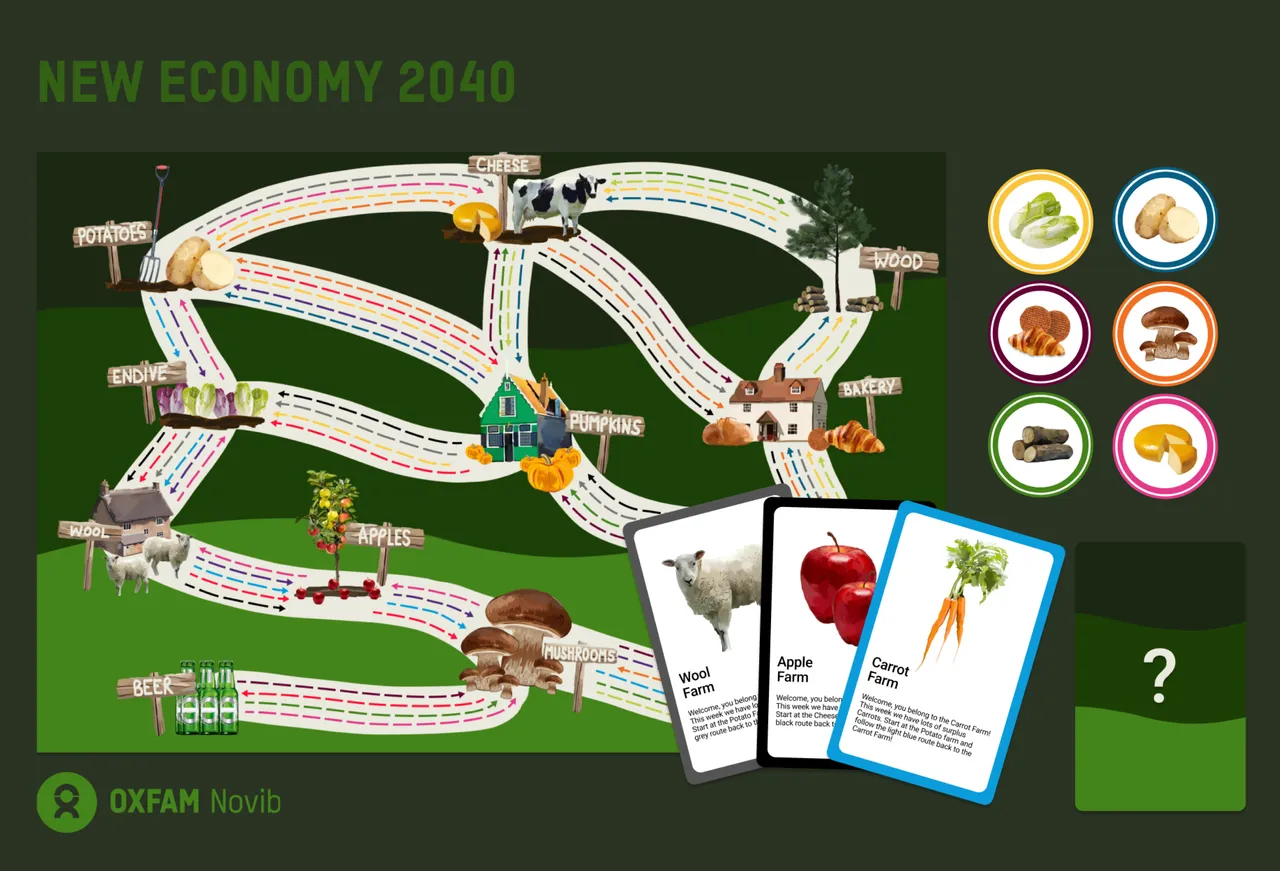
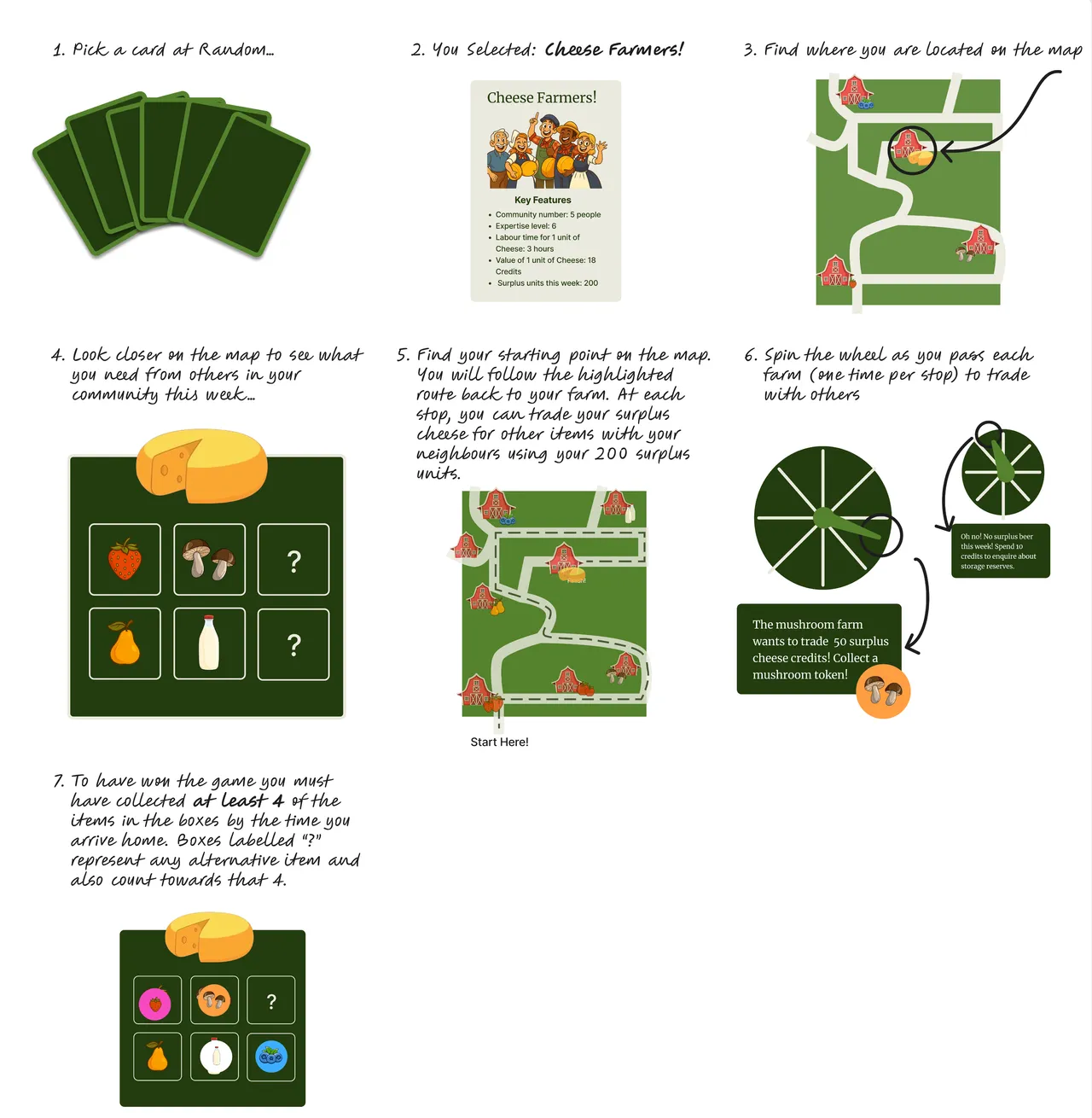
The game guides players through a series of steps that simulate trade in a post-capitalist community. Players pick cards, choose their farmer identity, locate themselves on the map, and trade with neighbours to collect the goods they need. The goal is to collect at least 4 different items through trading your surplus with others.
What if everyone had access to all of the goods or food they needed? If products and services were valued on labour and expertise?
Trade Experience Artefact
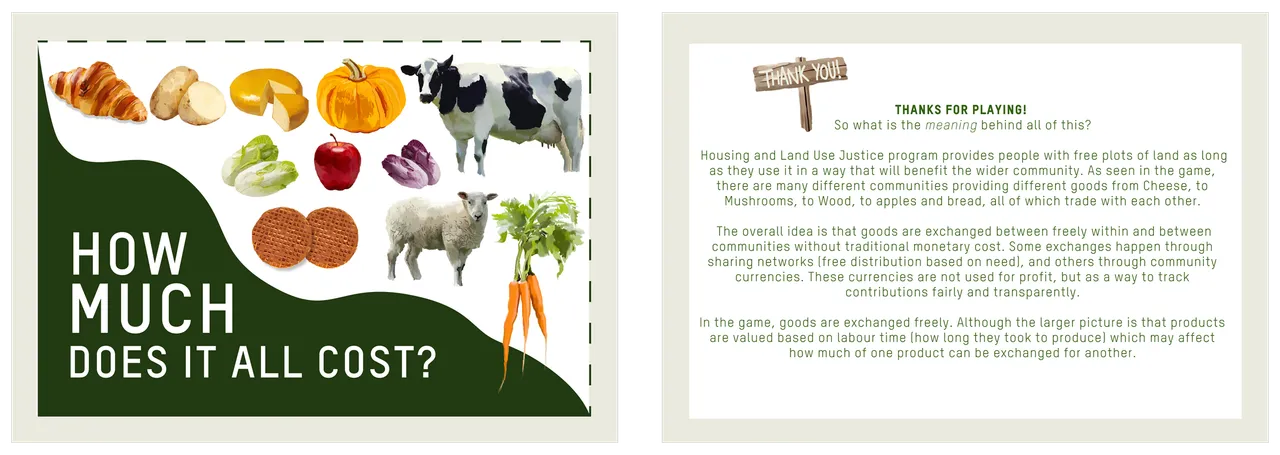
To meet this challenge, I designed a short, board-game experience in which participants trade surplus goods between communities. Each product implies information about the labour and expertise required to produce it, shifting trade decisions away from price and toward effort, knowledge, and social agreement. At the end of the game players are encouraged to read and take away a post card which explains the relationship between the products value, labour and expertise.
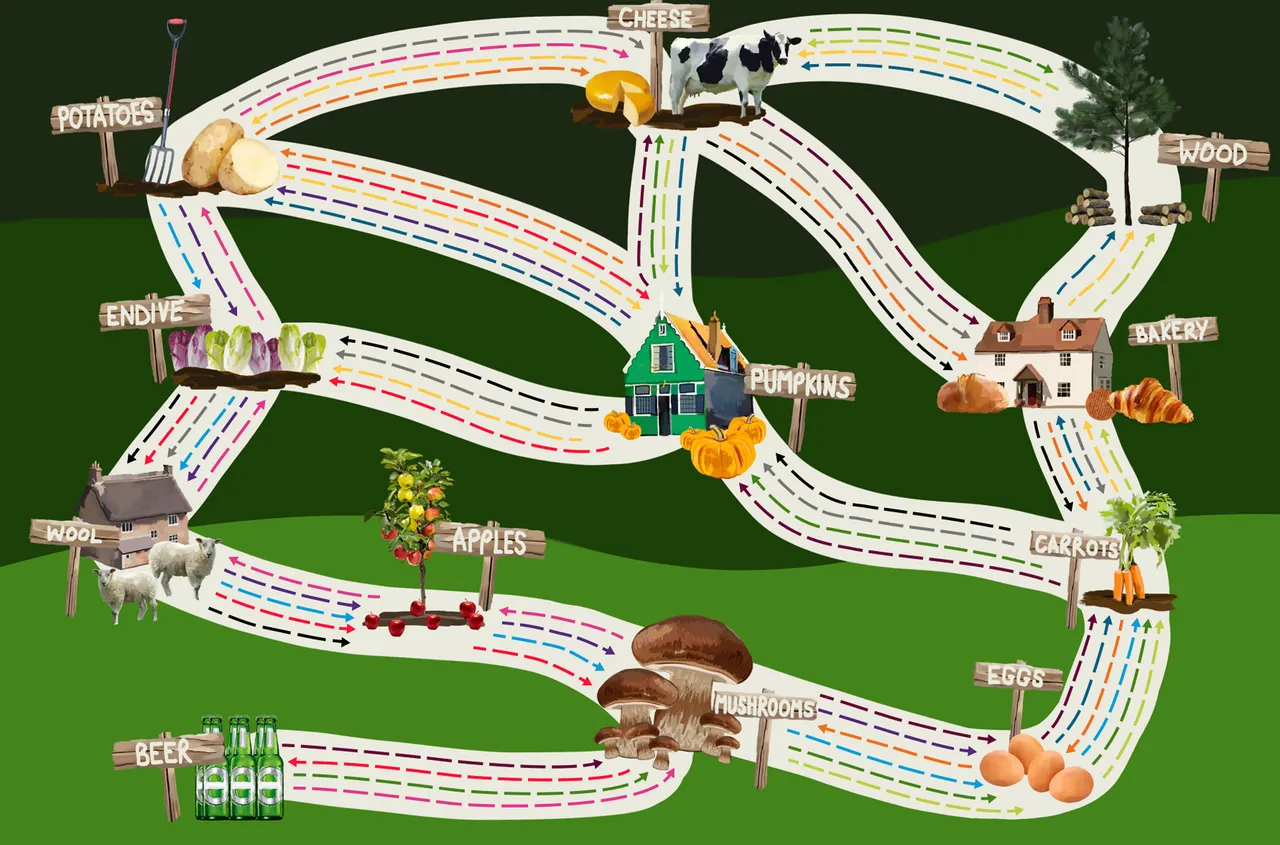
Board Map
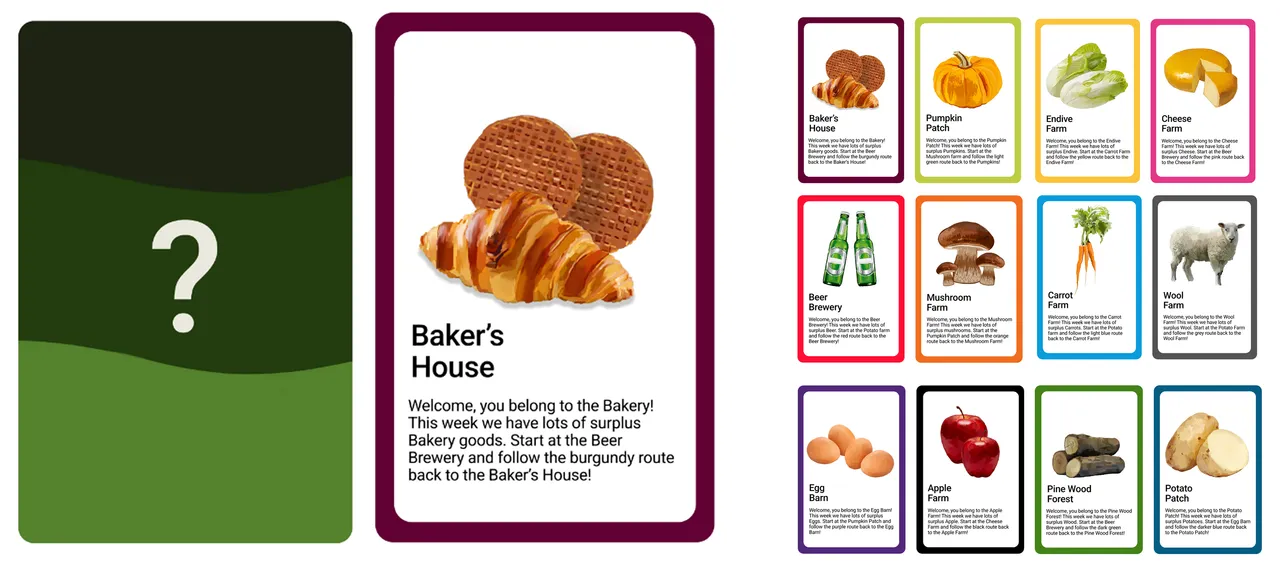
Playing Cards
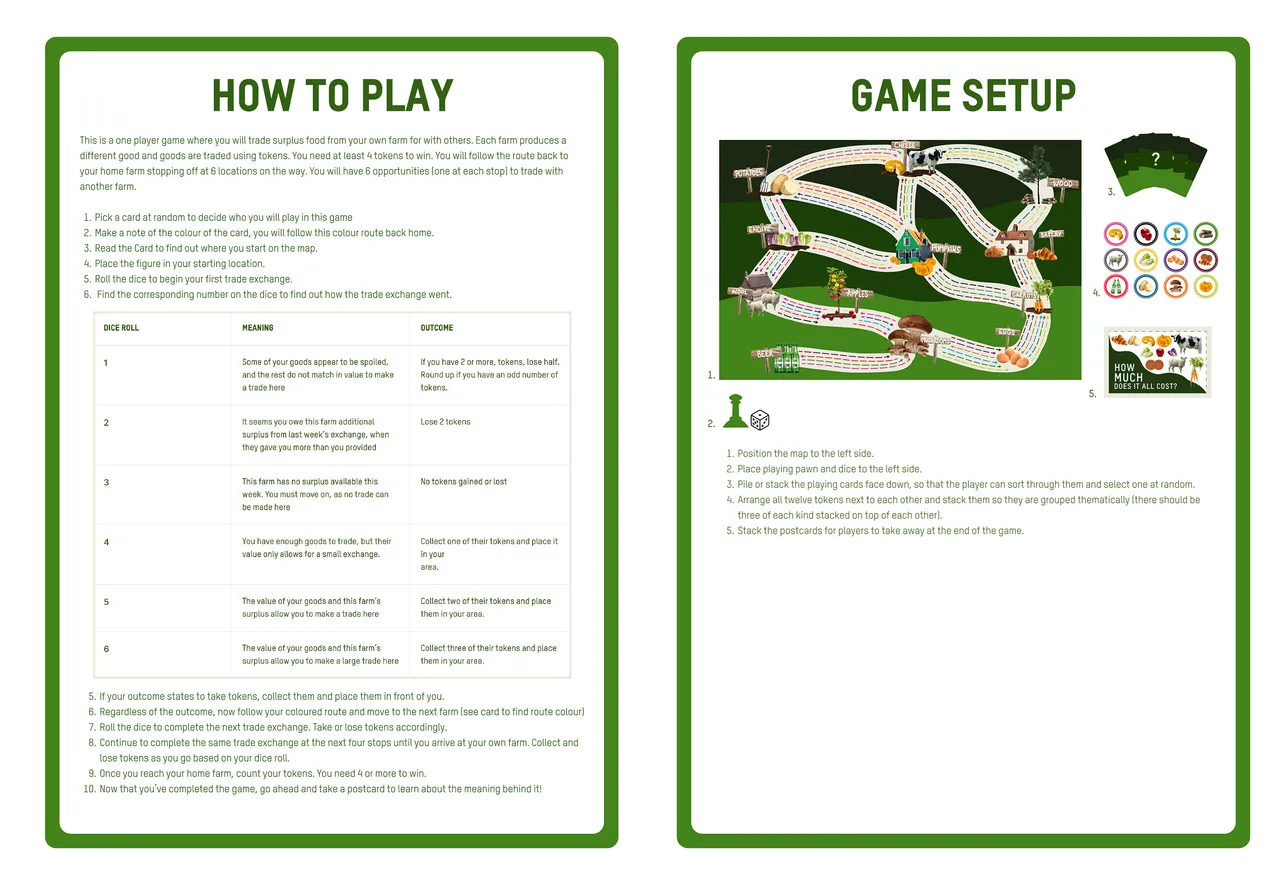
Instructions
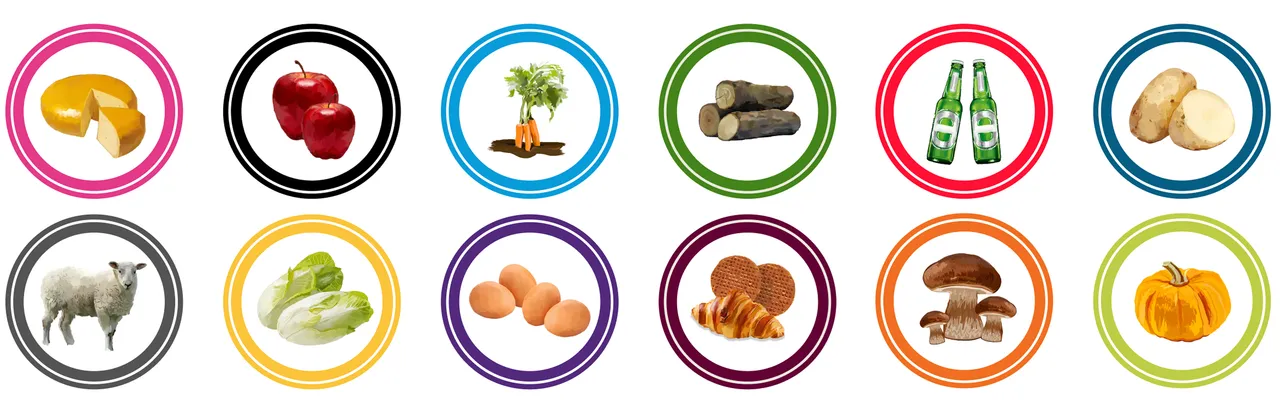
Tokens
Postcard
A takeaway postcard prompts players to reflect on the experience. It asks: "How much does it all cost?" and encourages continued thinking about value, fairness, and alternatives to capitalist exchange.