Collaborators: Ramla Anshur, Swarali Pandare, Suyash Sinha, Igor Caetano
This project challenges our food systems and the way they operate in the western world. It asks what a regenerative, reciprocal food system could look like if we drew from indigenous knowledge and took on a more-than-human perspective. Working with the Royal College of Art and Design Museum, we investigated what a post-capitalist food future could look like through speculative design.
"Countries can withstand coups d'état, wars and conflict, even leaving the EU, but no country can withstand the loss of its soil and fertility".
–Defra Secretary of State
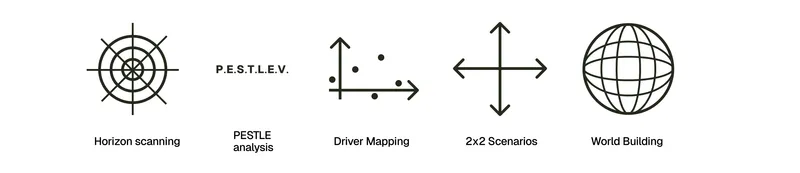
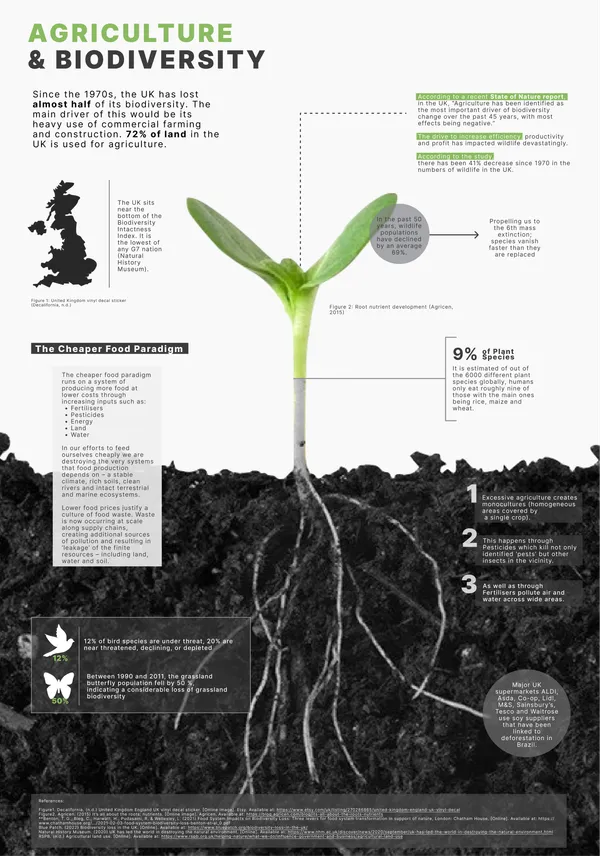
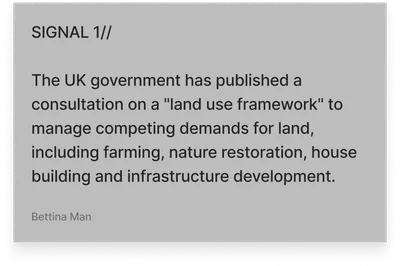
The Problem / Horizon Scanning
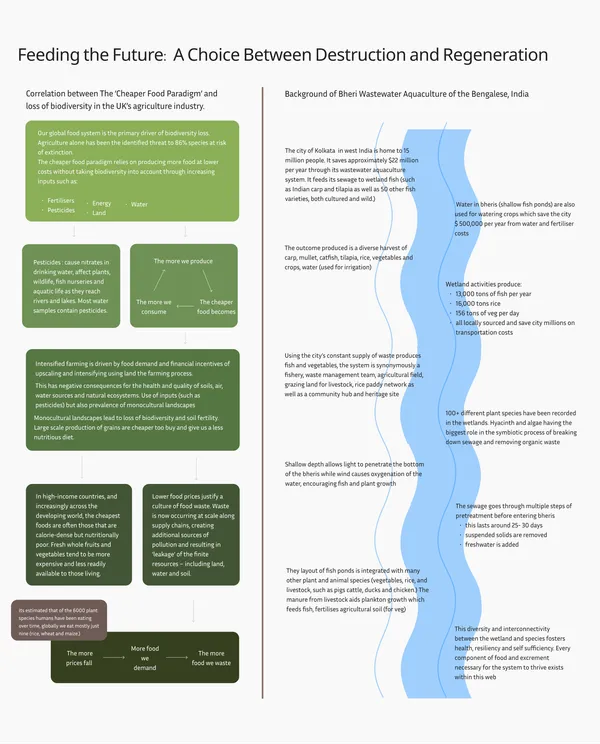
Due to agricultural practices, in the last 50 years the UK has lost almost half of its biodiversity, including around 70% of wildlife populations. As a country it has one of the lowest biodiversities in the world. Agriculture and farming has been identified as one of the most significant drivers of this.
In contrast, Indigenous cultures are shaped by deep and meaningful relationships to the land, water, plants, and animals that have sustained them. Their ancestral practices work alongside nature often increasing biodiversity by using symbiosis and biomimicry. The diets they sustain are rich in nutrients and non-extractive.
How can a preferable future by 2050 be reached in the UK by leveraging Indigenous traditional knowledge to tackle the consequences of globalisation and commercialisation of food and agricultural system that have led to:
• Loss of biodiversity in modern crops
• Increased greenhouse gas emissions
• The endangerment of local species
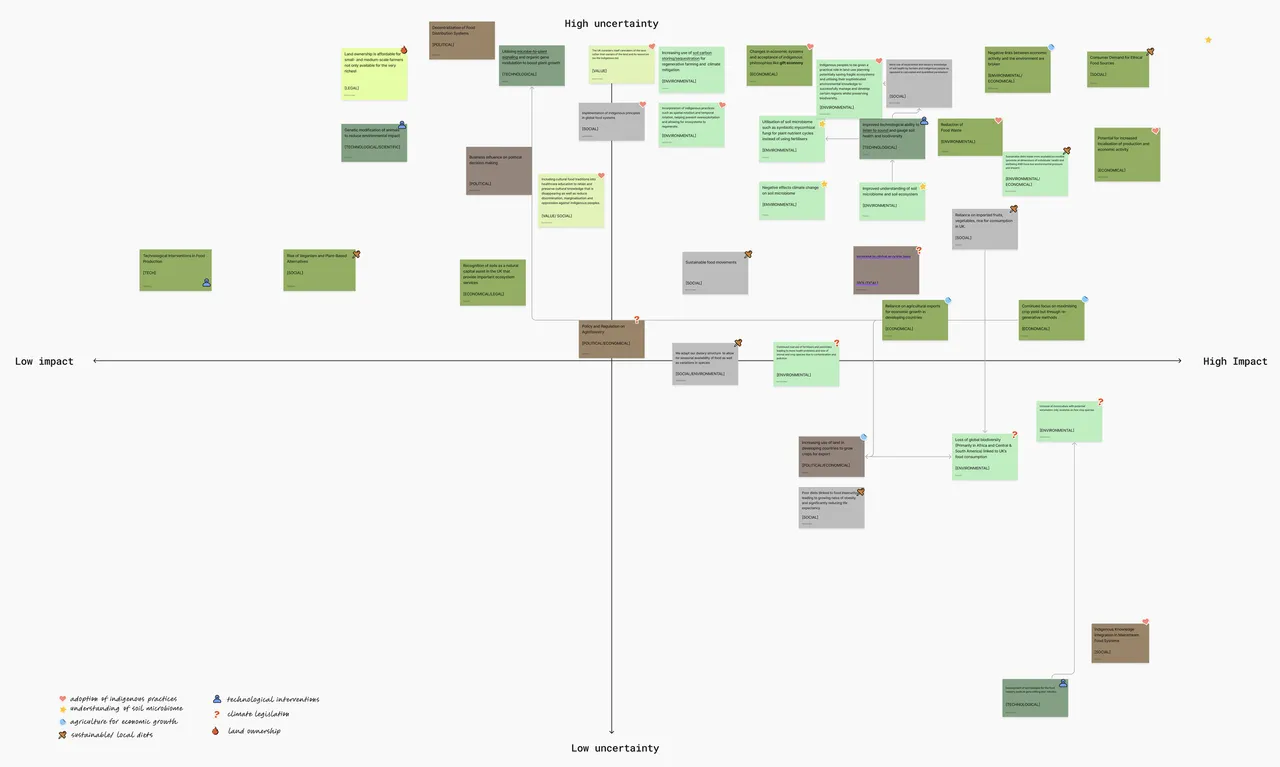
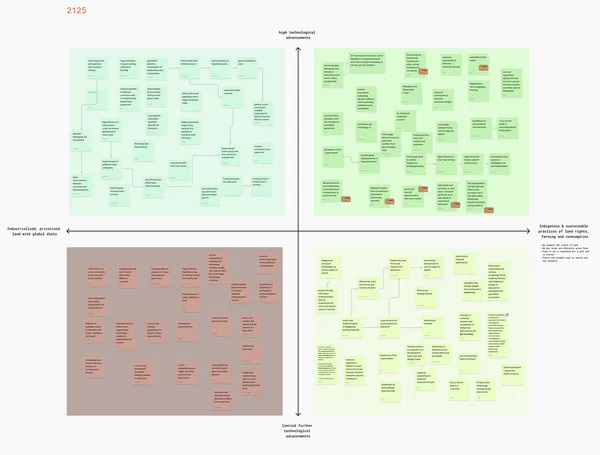
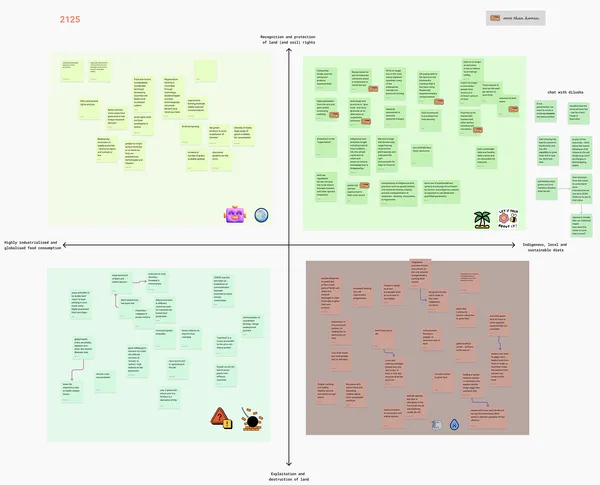
Driver Mapping
2x2 Scenarios and World Building
Our specific focus: the intersection of axes 'High Technological Advancements' and 'Indigenous & sustainable practices of land rights, farming and production'.
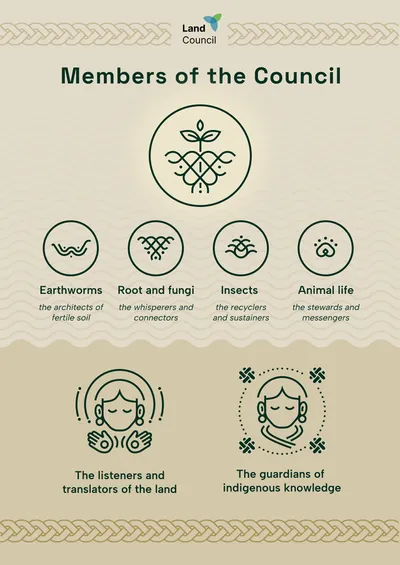
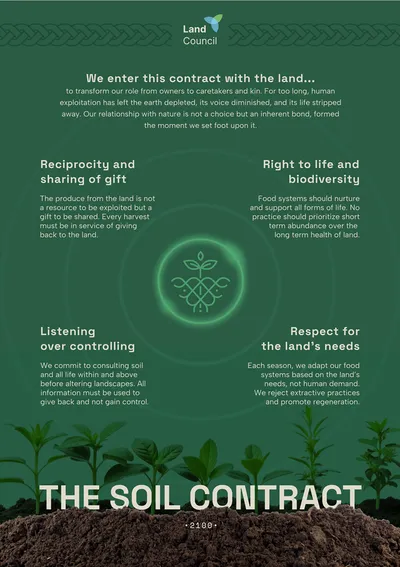
In this world set in 2050, human settlements are designed to align with the land's ecological capacity. They are governed by the Land Council, an assembly of human, animal, and plant species, led by a soil authority.
Communities follow seasonal rhythms, with periods dedicated to soil regeneration. AI-powered systems monitor land health. People contribute skills to grow, harvest, and return to the earth each season. Seasonal forecasts, shared publicly at food collection points, prompt preparation guides. Recipes are woven into regional patterns that express the land's collective needs.
This system fosters a balanced relationship between humans and the land, where decisions are driven by ecological needs, by aligning human activities with the earth's rhythms, communities sustain a regenerative cycle of giving and receiving, fostering long-term ecological balance.
Future Artefact #1 SoilSense: AI-Powered Soil Communication Device
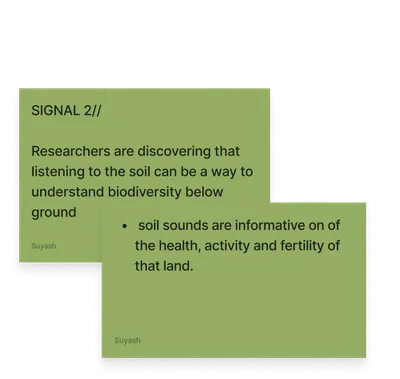
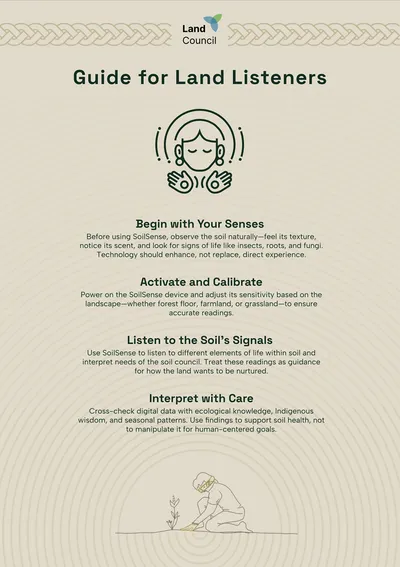
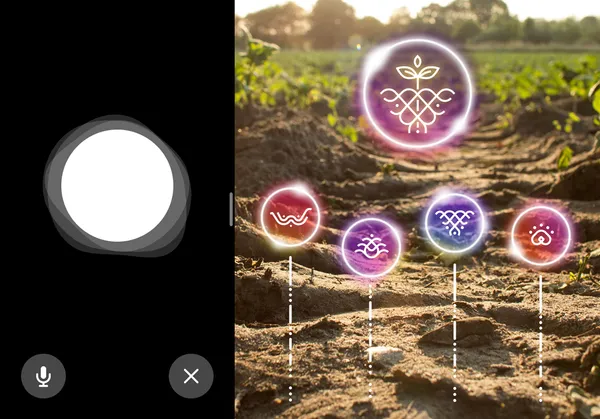
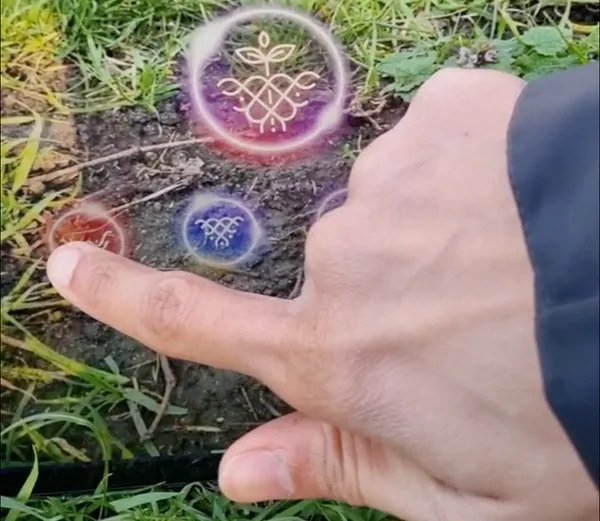
SoilSense is a functional prototype designed in Unity Engine. It acts as the soil's voice, translating underground data into actionable community guidance. Using embedded sensors, users scan soil to reveal real-time metrics. Through touch and sight interaction on a communal device, SoilSense responds to soil needs by generating customisable planting schedules and guiding nutrient-dense food choices.
Prototype & Interface
Interactive interface built in Unity Engine
Deployed as a working iPad app via Xcode
Designed to translate visual concepts into embodied interaction
Interaction Philosophy
Avoids anthropomorphising nature
Respects the more-than-human world
Encourages attentive listening rather than direct translation
Each interaction mirrors a dialogue between a trained Land Listener and the soil as an intelligent system
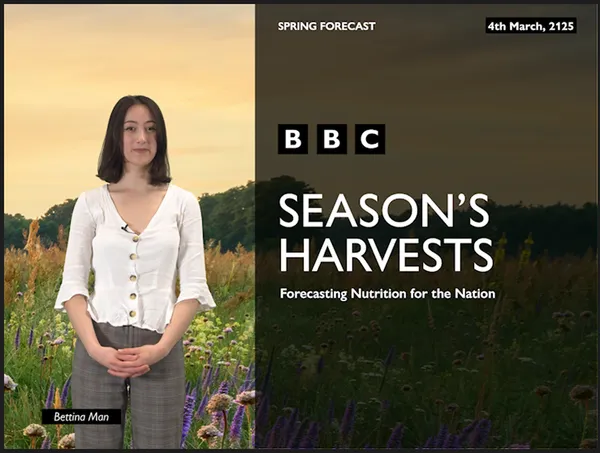
Future Artefact #2 Season's Harvest Forecast, Spring 2125
A short broadcast film showcasing a Season's Harvest Forecast for Spring 2125. This artefact imagines how weather forecasts would be presented in the UK if we prioritised the soil and ecosystems instead of human convenience.
Playing on the importance and familiarity of seasonal harvests, it communicates what is happening underneath our feet. Inspired by BBC weather reports, it translates soil health data into a bounded and non-human experience.
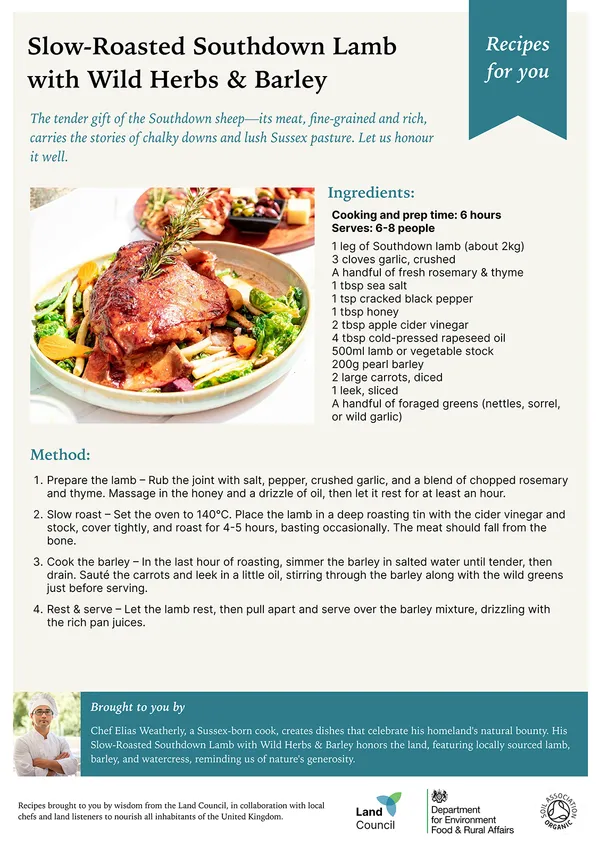
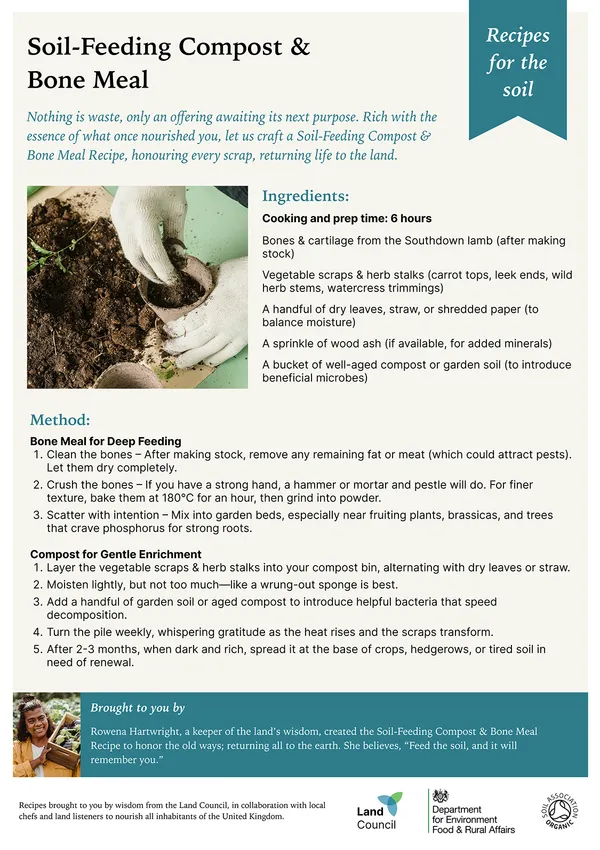
Future Artefact #3 Dual Recipe Cards: For you and the Soil
Recipe cards for humans using seasonal and local produce and recipes for the soil using their scraps. This artefact reflects indigenous principles by repurposing waste, and embodies a future where citizens have collective responsibility to contribute to regenerative and sustainable consumption. By challenging the notion of nature serving humans, the recipe cards showcase a mutually beneficial relationship between humans and non-human beings through soil nourishment.